
India Travel Cost: How Much Does a Trip to India Cost in 2025?

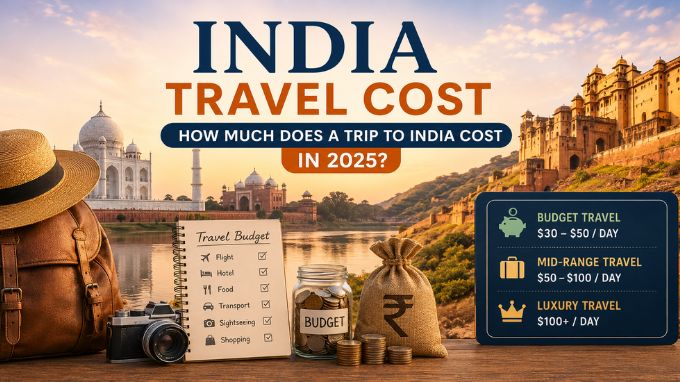
The cost of travel in India is one of the most searched questions before any India trip and also one of the most misunderstood. India is genuinely affordable compared to most Western countries, but the actual number varies wildly depending on where you go, how you travel, and what kind of experience you’re after.
A backpacker and a luxury traveler can be 50 meters from each other at the Taj Mahal and have spent $30 vs $300 to get there. Both had a real day.
This guide breaks down the India vacation cost honestly by category, by budget level, and with specific numbers rather than vague ranges.
The Short Answer: Daily Budget by Travel Style
Before the detail, here’s the headline figure most people are looking for:
| Travel Style | Average Daily Spend (USD) | What This Looks Like |
| Budget | $25–$40/day | Hostels or guesthouses, local food, trains, shared transport |
| Mid-Range | $80–$150/day | Comfortable hotels, restaurant meals, private transfers |
| Comfortable | $200–$350/day | 4-star hotels, guided tours, domestic flights |
| Luxury | $400–$1,000+/day | 5-star properties, private guides, curated experiences |
These are per-person estimates for someone traveling as part of a pair. Solo travelers pay slightly more (single supplements on hotels, no one to split car costs with). Groups of three or four bring the per-person number down.
Hotels: Where Your India Trip Budget Goes First
Accommodation is usually the biggest variable in an India trip budget.
Budget (Under $30/night per person)
Hostels in Delhi, Agra, and Jaipur run $6–$15/night for a dorm bed. Private budget guesthouses start around $20–$30 for a double room. The quality has improved a lot in recent years — many budget properties now offer reliable WiFi, AC, and clean bathrooms.
Mid-Range ($60–$150/night for a double room)
This is where the value of India really shows. For $80–$100/night, you can stay at a well-run 3 to 4-star hotel with pool, breakfast, and central location. Properties like the Trident Agra or Alsisar Haveli in Jaipur sit comfortably in this range and would cost two to three times more in Europe.
Luxury ($200–$600+/night)
India’s luxury hotel scene is world-class. The Oberoi Amarvilas in Agra (views of the Taj Mahal from every room), the Rambagh Palace in Jaipur, the Leela Palace in Delhi — these are some of the best hotels in Asia, full stop. Rates start around $400–$500 and go up from there.
Food: Where India Is Incredibly Affordable
Food is where India’s cost of travel genuinely surprises American visitors — in a good way.
Street Food and Local Restaurants
A full meal at a local dhaba (roadside restaurant) costs ₹100–₹300 (~$1.25–$3.60). This includes rice, lentils, vegetables, and bread. The food is real and often very good.
For context: a filling lunch in Delhi’s Chandni Chowk area — stuffed paranthas, chai, and sweets — typically runs under $3.
Mid-Range Restaurants
Sit-down restaurants with English menus and reliable hygiene charge ₹500–₹1,500 per person ($6–$18). This covers most of the restaurants tourists actually use near major monuments.
Upscale Dining
A dinner at a well-regarded restaurant in Delhi or Jaipur runs ₹2,000–₹5,000 per person ($24–$60). For something like Bukhara at ITC Maurya (one of Delhi’s most celebrated restaurants) or Suvarna Mahal at Rambagh Palace, budget closer to $80–$100 per person.
Practical note: Drinking tap water is not safe in India. Budget ₹30–₹50 per day for bottled water, or bring a filtered water bottle. It’s a small cost but adds up over a 10-day trip.
Transport: Getting Around India
Domestic Flights
India has a very competitive domestic airline market — IndiGo, Air India, and SpiceJet regularly offer routes under $30–$50 one way when booked a few weeks in advance. Delhi to Mumbai, Delhi to Goa, Jaipur to Kochi — these are all short flights at low prices. Last-minute bookings spike to $80–$150+, so plan ahead.
Trains
Indian trains are the backbone of the country’s transport system and excellent value. The Gatimaan Express (Delhi to Agra) costs about $9 each way. A Delhi to Jaipur Shatabdi Express ticket runs about $10–$15. Overnight trains with AC sleeper compartments can carry you 1,000+ km for $20–$40.
Book through the IRCTC website. It takes some patience to set up an account, but it works.
Private Cars
A private car with driver for a day (8–10 hours) within a city runs ₹2,500–₹4,000 ($30–$50). For inter-city trips like Delhi to Agra round-trip, budget ₹5,000–₹8,000 ($60–$97) for the vehicle — not per person. This is the most popular transport option for Americans doing the Golden Triangle.
App-Based Taxis
Ola and Uber operate in all major Indian cities and work well. Prices are reasonable — a 20-minute Ola ride in Delhi typically costs ₹150–₹250 ($1.80–$3). Always confirm the route before departure; GPS in dense urban areas can be unreliable.
Entry Fees at Major Monuments
India’s monuments are significantly cheaper to visit than comparable sites in Europe or the Americas — even at foreigner prices.
| Monument | Entry Fee (Foreigners) | USD Equivalent |
| Taj Mahal | ₹1,300 | ~$16 |
| Taj Mahal interior (extra) | ₹200 | ~$2.50 |
| Agra Fort | ₹650 | ~$8 |
| Red Fort, Delhi | ₹600 | ~$7 |
| Humayun’s Tomb | ₹600 | ~$7 |
| Amer Fort, Jaipur | ₹550 | ~$6.50 |
| Fatehpur Sikri | ₹610 | ~$7.50 |
For a 7-day Golden Triangle trip hitting the main monuments at each city, budget around $80–$100 per person in entry fees total.
Tour Guides
Good guides are worth paying for in India. The history of the monuments — the politics, the personal stories, the architectural tricks — makes the visits significantly better.
Licensed government guides charge ₹1,000–₹1,500 ($12–$18) for a 2-hour monument tour and ₹2,500–₹4,000 for a full-day city tour. Private guides arranged through operators charge more — $40–$80 for a full day — but are often better prepared.
Avoid unlicensed guides who approach you outside monument gates. They work on commission from shops and tend to redirect your time toward purchases rather than sights.
Sample India Trip Budget for Americans: 7 Days
Here’s what a 7-day Golden Triangle trip (Delhi, Agra, Jaipur) actually costs, by category:
| Category | Budget Trip | Mid-Range | Comfortable |
| Hotels (6 nights) | $180 | $600 | $1,500 |
| Food (all meals) | $90 | $350 | $700 |
| Transport (full circuit) | $100 | $350 | $600 |
| Entry fees | $90 | $90 | $90 |
| Guides | $45 | $120 | $250 |
| Misc/tips/water | $40 | $80 | $150 |
| Total per person | ~$545 | ~$1,590 | ~$3,290 |
International flights (US to Delhi) add $700–$1,500 round-trip depending on season and how far in advance you book.
Things That Cost More Than Expect
Tipping: Not mandatory, but it’s expected for guides, drivers, and hotel staff. Budget roughly ₹200–₹500 per day in tips ($2.50–$6) for the people helping you.
Sim card and data: A local SIM with generous data costs about ₹300–₹600 ($4–$7) for a 30-day plan. Worth every rupee. Pick one up at the airport on arrival — the desks are right outside baggage claim.
Travel insurance: Not India-specific, but essential. Medical care in India can be surprisingly good (and cheap) in major cities, but evacuation coverage is worth having if something goes wrong in a smaller town.
Shopping: Jaipur especially. Block-printed textiles, gemstones, leather goods, marble inlay pieces. Budget a separate line item if you’re the type who buys things on trips.
Is India Good Value for Americans?
Yes, genuinely. The dollar goes a long way in India — more than in most of Europe, Southeast Asia, or Latin America at equivalent experience levels.
A mid-range India trip that would cost $150/day per person in Europe costs $80–$100 in India. The food quality at that price point is higher, the cultural experience is denser, and the major monuments are among the most significant in the world.
The honest caveat: India is not always easy. The crowds, the heat in summer, the occasional infrastructure frustration – these are real. But most Americans who visit find the payoff is well worth the extra planning it requires.
How much cash should I carry in India?
Keep ₹3,000–₹5,000 ($36–$60) in cash at any given time. ATMs are widely available in cities but can be unreliable during power outages. Cards work at most hotels and better restaurants but not at small stalls, auto-rickshaws, or monument ticket counters.
Is India cheaper than Thailand or Vietnam?
Broadly comparable. India is slightly cheaper for food and transport; Thailand is somewhat cheaper for beach-area accommodation. Vietnam tends to be the cheapest of the three. All three are significantly cheaper than Japan or the UAE.
When is the cheapest time to visit India?
April to June (summer) has the lowest prices for flights and hotels. It also has the highest temperatures 40–45°C in Delhi and Agra. If you can handle the heat, the savings are real. October to March is the peak season with the best weather and higher prices.
Should I book everything in advance or arrange it on the ground?
Trains and hotels for popular dates should be booked in advance (especially October–February). Monument tickets can be bought on arrival most days, though online booking saves queue time. Guides and local transport are generally fine to arrange on the ground.