
Indian Culture Etiquette for Foreigners: Essential Do’s and Don’ts

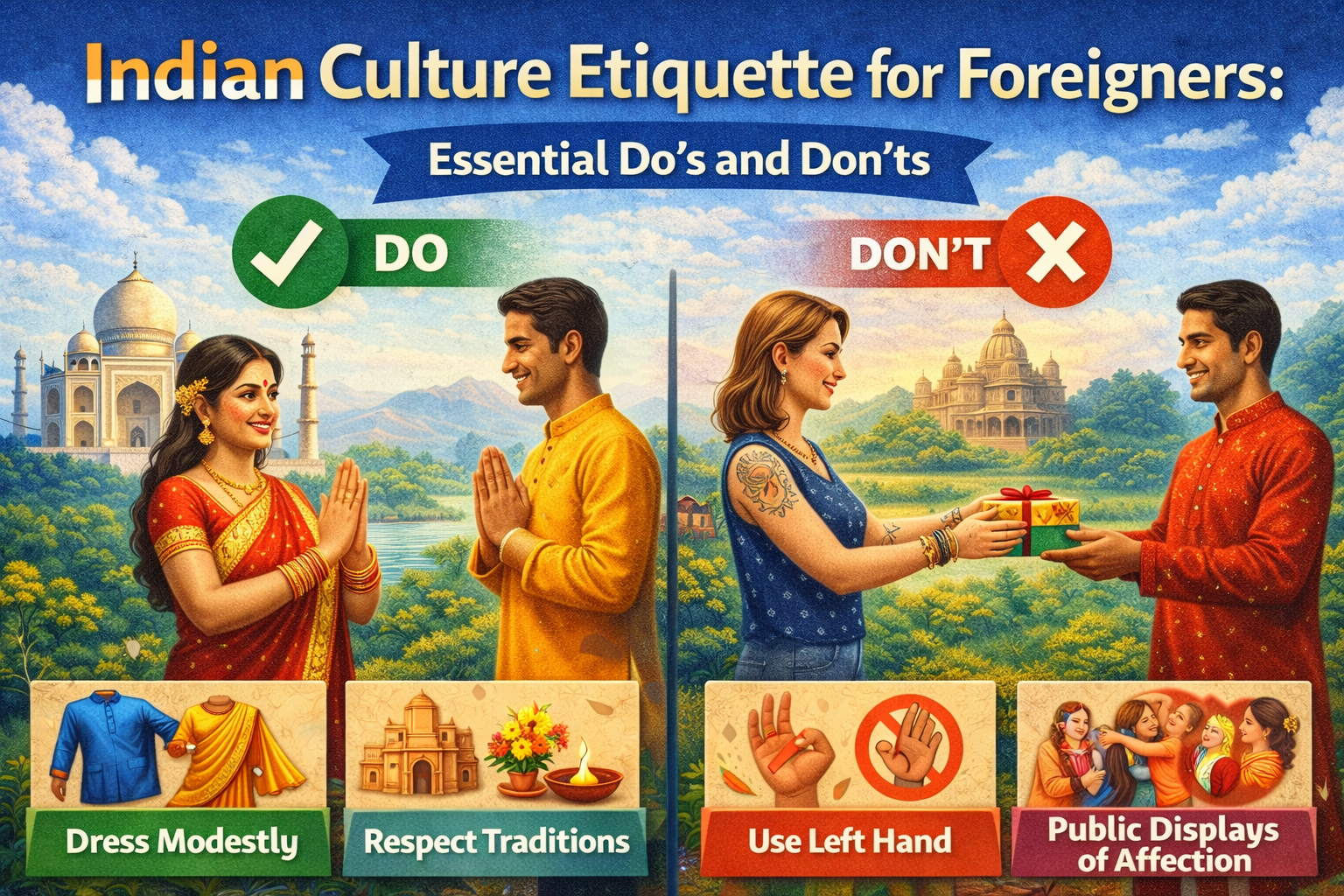
India is known for its diversity and incredible traditions, strong cultural understanding and hospitable nature. The first-time visitor has to experience the colorful and vibrant nature of this country; but may find it hard to adapt to all of the sights, sounds etc. The more you understand about what is socially acceptable in Indian culture, the easier it will be to develop a rapport with Indians and avoid any unintentional conflict when traveling through India. Additionally, this type of information will assist you with developing a very positive travel experience to India.
Indians are generally very forgiving and understanding of foreign visitors; however by taking the time to have a basic cultural understanding of their world, it will create a good initial impression. The following guide will also provide you with key information to familiarize yourself with Indian culture and customs as well as tips to assist throughout your journey.
Understanding Indian Culture and Traditions
Indian culture is based on family values and relationships, religion and belief systems, respect for elders, community and social obligation. Generally speaking, most of the identifiable cultural rules are common throughout many parts of India, even if the emergence or exact application of a rule may vary from region to region.
One of the many ways that religion influences daily life in India is through the availability of religious institutions, such as temples, mosques, gurudwaras, and churches. Therefore, it is crucial to respect the beliefs and traditions associated with religion when travelling throughout India.
Greetings and Social Behavior in India
How do you say Hello in India?
- “Namaste” is a well-known traditional greeting that involves placing both hands together and bowing down slightly.
- You will find handshakes are used often in urban areas, mostly in business situations.
- Do not hug or touch a stranger unless you know them very well and same-sex.
Respect for the Elderly
- Indians honour their elders with much respect.
- When speaking with an elder, listen closely and use a polite tone.
- In India, some people will touch their elder’s feet out of respect.
Dress Code: What to Wear in India
Modesty in Clothing
In general, India is still a conservative country (as are many other countries) and people should be dressed modestly, particularly in rural communities or going to any religious places.
- If you are a woman, ensure your shoulders and knees are covered while in India.
- If you are a man, then please ensure you do not walk around topless in public.
Religious Dress Code Requirements
- When attending any place of worship, such as a Temple, Mosque, or Gurudwara, you must remove your shoes.
- When visiting a Sikh’s Temple, you must cover your head (scarf is usually provided).
- It is best to wear simple clothing and dress respectfully.
Dining Etiquette in India
Eating With Hands
Many people in various regions of India typically eat using only their right hands. As the left hand is viewed as being unclean, Muslims do not use it to eat or pass items to others.
Sharing Food
The people of India enjoy sharing food with their guests. It may be perceived as impolite to decline food repeatedly; it would be more polite to accept a very small amount.
Alcohol and Eating in Public
In many states, it is not permitted to drink alcohol in public. It is common in India to eat at street stalls; however, it is advisable to choose stalls that are clean and that appear to be busy.
Indian Customs Travel: Do’s and Don’ts
Do’s in Indian Culture
- Treat others with kindness by smiling when greeting them.
- If you wish to take photographs of people or religious places, ask for permission first.
- Respect the culture’s customs and their festivals/holidays.
- Be patient; time may pass more slowly than you expect.
Don’ts in Indian Culture
- Do not point your feet towards anyone’s body (especially someone’s feet) or in the direction of an idol or religious object.
- Do not touch another person’s head; it is considered to be a sensitive part of their body.
- Avoid displaying affection towards an individual other than through bodily contact.
- Do not make negative comments or remarks about another person’s religious belief or custom.
Communication and Body Language
- In India a nod of the head will usually indicate agreement.
- In public places loud discussions are common.
- Personal space is much less classically defined than in the West.
When speaking, politeness and calmness can help conversation even when things are busy or confusing.
Visiting Homes and Temples in India
Take off your shoes before entering.
- Be willing to accept tea or snacks if they are offered; this shows the host’s hospitality.
- Complimenting the food or home is appreciated.
Temple Courtesies
- Speak in whispers or be quiet.
- Take care to check if photography is allowed.
- Observe local customs and signage.
Indian Traditions Guide for Foreign Travelers
India has numerous festivals throughout the year including Diwali, Holi, Eid, Christmas and Navratri. When visiting India to celebrate festivals, please keep the following in mind:
- Be ready to see large groups of people celebrating.
- Dress appropriately based upon culture or local customs (some places will not allow skirts or shorts).
- If you are invited to participate in a celebration, do so with respect.
Attending a festival will make it easier to understand Indian culture.
Safety and Respect While Traveling in India
- Bargaining in local markets is common; remember that you should bargain in a polite manner.
- Do not argue or act aggressively towards people.
- You need to adhere to proper rules regarding women’s safety and be aware of cultural norms.
- Use your intuition regarding transportation and use official forms of transportation.
Why Understanding Indian Culture Etiquette Matters
As a foreigner, it is beneficial to understand the cultural etiquette of India as you can:
– Connect with locals in a friendly way
– Feel confident when traveling through city and rural areas
– Avoid any potential cultural blunders
– Gain a deeper and more genuine appreciation for the Indian experience.
Even though India may seem overwhelming at first glance, you will come to know and appreciate the diverse customs of India such that it will feel like a warm, welcoming and unforgettable adventure.
Conclusion
India is not merely a tourist destination; it is an experience: an abundance of culture, history and diversity. With a basic understanding of Indian customs, foreigners will be able to respectfully and harmoniously enjoy their time in India.
Cultural sensitivity goes a long way towards helping you to experience a wonderful journey while enjoying your time in India.